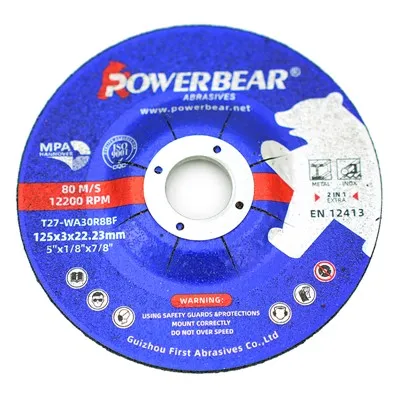



Guizhou First Abrasives Co., Ltd. is a professional company dedicated to the research , production ,sales and services of resin bonded cutting wheels and grinding wheels. Form 2009 to 2023,we continue expanding our factory,star having 2 machines until now 35 machines.Our output ,nowadays,keep more than300000pcs/daily. As a high-tech enterprises ,we will continue to increase investment in technology research and development, introduce advanced equipment, improve product testing methods, and focus on the production of high-end products while developing new products to meet market demand.
Why Choose US
Our Factory
Founded in 2009, Guizhou First Abrasives Co., Ltd. is a professional company dedicated to the research, production, sales and services of resin bonded cutting wheels and grinding wheels. The company is located in Shuichang Industrial Park, Longli County, Guizhou Province, and covers an area of over 60000 m2, with a workforce of more than 300 employees.
Production Market
After more than a decade of development, the company's sales channels have expanded across the country, and its products are now exported to 20 countries and regions including Southeast Asia, Europe, America, and the Middle East.
Our Product
Powerbear is our conpany's best-selling brand in the word.We supply resin-bonded grinding wheel and flap disc.
Resin-boned grinding wheel: Involve cutting disc for metal,cutting disc for inox,2in1 cutting disc and grinding disc.
Flap disc: Invovle Aluminum Oxide Flap Disc,Calcined Aluminum Flap Disc,Zirconia Flap Disc.
Our Certificate
In 2019, the company became a national high-tech enterprise with an annual production capacity of 150 million pieces of cutting and grinding wheels. With advanced technology equipment and strong technical expertise, experienced production, and comprehensive testing methods, the company has obtained ISO9001 quality system certification and 21 unility model patent certificate.

Max speed :80m/s
Aplication method:Angle grinder,Handheld,fixed,and movable cutting machines.

4"107*1.2*16mm Cutting Disc for Stainless Steel and Metal
4inch cutting disc cutting for metal and inox

Cutting Disc for Stainless Steel
Max speed :80m/s
Aplication method:Angle grinder,Handheld,fixed,and movable cutting machines.

Max speed : 80m/s
Aplication method: Handheld,fixed,and movable cutting machines

Max speed :80m/s
Aplication method:Angle grinder,Handheld,fixed,and movable cutting machines.

Max speed :80m/s
Aplication method:Angle grinder,Handheld,fixed,and movable cutting machines.


Max speed :80m/s
Aplication method:Angle grinder,Handheld,fixed,and movable cutting machines.
What is 2in1 Cutting Disc
The 2in1 cut-off wheel is the perfect tool for all cutting tasks. No matter if metal sheets, profiles, pipes, bars or solid material made of steel or stainless steel, with this cut-off wheel you are perfectly served. Rugged construction and reliable performance make this tool the perfect choice for do-it-yourselfer and professional alike. Get your cut-off jobs done faster and more efficiently with the 2in1 cut-off wheel.
Advantages of 2in1 Cutting Disc
High resolution
Cutting slices can provide high-resolution images and data, and can detect tiny sample structures and features;
Non-destructive
Cutting slices can obtain the internal structure and information without destroying the sample, and can preserve the integrity of the sample;
Convenience and quickness
Cutting slices are a fast analysis tool, which can often be completed within a few minutes;
Diversity
Cutting discs can be applied to different types of samples, such as biological tissues, cellulose materials, metals, minerals, etc.
Material Matters: Know Your Material
The first step in choosing a cutting disc is understanding the material you'll be cutting. Whether it's metal, stone, concrete, or something else entirely, each material has specific cutting requirements. Different cutting discs are designed for different materials, so matching the right disc to your task is crucial for optimal results.
Disc Size: Getting the Right Fit
The size of your cutting disc matters. It's essential to choose a disc that fits your tool and the scale of your project. Common sizes range from 4 inches to 12 inches or more. Smaller discs are ideal for precision work, while larger discs are better suited for heavy-duty tasks. Ensure compatibility with your cutting tool before making a selection.
Safety First: Check for Certifications
Safety should never be compromised. Look for cutting discs that meet industry safety standards. Certifications such as OSHA, ANSI, or EN provide assurance that the disc has undergone rigorous testing for quality and safety. Always prioritize your well-being and that of those around you.
Disc Type: Understanding the Varieties
Cutting discs come in various types, each tailored to specific materials and applications. Some common types include:
●Metal Cutting Discs: Ideal for cutting through various metals like steel, aluminum, and copper.
●Masonry Cutting Discs: Designed for concrete, brick, and stone cutting.
●Diamond Cutting Discs: Known for their durability and suitability for cutting hard materials like tile, ceramics, and granite.
●Multi-Purpose Cutting Discs: Versatile discs suitable for various materials, providing a cost-effective option for DIYers.
Thickness and Profile: Precision vs. Speed
The thickness and profile of your cutting disc influence its cutting characteristics. Thicker discs offer more stability for precise cuts but may sacrifice speed. Thin discs, on the other hand, cut quickly but might be less accurate. Choose the thickness and profile that align with your project's demands for speed and precision.
Budget and Quality: Finding the Balance
While it's tempting to opt for the cheapest cutting disc, remember that quality matters. Investing in a higher-quality disc can result in longer lifespan, better performance, and safer operation. Consider your budget, but don't compromise on quality when it comes to something as critical as a cutting disc.
Cutting Wheels: Sizes and Uses
Small Diameter Cutting Wheels
Small diameter cutting wheels typically range from 3 to 6 inches in diameter and are designed for use with handheld angle grinders. They are ideal for cutting thin materials and can be used for precision cutting and shaping. Small diameter cutting wheels are commonly used in metalworking, plumbing, and welding applications.
Large Diameter Cutting Wheels
Large diameter cutting wheels range from 14 to 20 inches in diameter and are designed for use with stationary machines, such as chop saws and table saws. They are ideal for cutting thick materials and can be used for heavy-duty cutting and grinding applications. Large diameter cutting wheels are commonly used in construction, metal fabrication, and other heavy industries.
Thin Cutting Wheels
Thin cutting wheels are designed for precision cutting of thin metal sheets and pipes. They typically range from 0.045 to 0.125 inches in thickness and can be used with handheld angle grinders or stationary machines. Thin cutting wheels are commonly used in metalworking, automotive, and aerospace applications.
Thick Cutting Wheels
Thick cutting wheels are designed for heavy-duty cutting of thick metal parts and structures. They typically range from 0.25 to 0.5 inches in thickness and can be used with stationary machines, such as chop saws and table saws. Thick cutting wheels are commonly used in construction, metal fabrication, and other heavy industries.
Depressed-Center Cutting Disc
Depressed center cutting wheels are designed for use with handheld angle grinders and feature a depressed center that allows for flush cutting and grinding. They come in various sizes and thicknesses and can be used for cutting and grinding applications. Depressed center cutting wheels are commonly used in metalworking, automotive, and construction applications.
Diamond Cutting Wheels
Diamond cutting wheels are designed for cutting hard and abrasive materials, such as concrete, stone, and ceramic. They come in various sizes and shapes and can be used with handheld angle grinders or stationary machines. Diamond cutting wheels are commonly used in construction, masonry, and tile industries.
Abrasive Cutting Wheels
Abrasive cutting wheels are designed for cutting and grinding applications and come in various sizes and shapes. They are made of abrasive materials, such as aluminum oxide, silicon carbide, and zirconia alumina, and can be used with handheld angle grinders or stationary machines. Abrasive cutting wheels are commonly used in metalworking, woodworking, and construction applications.
The cutting disc with a diameter of 300mm is a tool used for cutting metal, stone and other hard materials. Its production process mainly includes raw material preparation, mixing, molding, sintering, and other steps.
First of all, in order to produce high-quality cutting discs, it is necessary to select high-quality raw materials as the basis of production. The raw materials of the cutting disc generally include resin, abrasive, filler, glass fiber, etc.
Among them, the resin is the substrate of the cutting disc, and the abrasive is the key part used to cut the material. In the process of raw material preparation, various raw materials need to be mixed together accurately according to a certain proportion to achieve the best process effect.
After mixing, the raw materials are sent to the molding process. In this step, the raw material is processed into a disk type with a specific shape and specification. Usually, in the molding process need to use professional die and press to complete, to ensure that the cutting disc shape, size and clear hole position are in line with the requirements.
After forming, the cutting disc needs to be sintered first. The so-called sintering, refers to the forming of the cutting disc into a special high temperature furnace, with high temperature environment will be the raw materials in the disc for reinforcement and solidification molding. This step has a crucial effect on the high temperature resistance, hardness and wear performance of the cutting disc.
This is the production process of the 300mm diameter cutting disc. Each step is necessary and vital. Only after careful design and perfect production process, can we produce high-quality cutting plates with excellent quality, stable performance and long life, so as to provide the majority of users with quality service and extreme experience.
Step 1
Installing cut off wheel into Grinder
Please make sure that the grinder power cord is disconnected.
Warning: Failure to disconnect the power can result in injury. Ensure that your grinder's power is completely off before continuing to the next step. If you have a cordless angle grinder, remove the battery from the tool. Removing the battery will also make the tool lighter and easier to manipulate
Press and hold the spindle lock on the stem of the grinder between the wheel guard and the body. Rotate the wheel with your other hand until it locks into position.
Step 2
Installing cut off wheel into Grinder
Turn the nut securing the wheel to the spindle counterclockwise with the supplied wrench that came with the grinder. If you cannot locate the original wrench, use a regular wrench to remove the nut.

Step 3
Place the new wheel over the stem, resting the hump on the top of the wheel inside the concave of the backing plate. Thread the securing nut onto the stem until the stem begins to turn. Press and hold the spindle lock while tightening the nut with the wrench. Hand-tighten the new disc. Finally, your side grinder should now function properly.
Last but not least, attach a safety installation sticker.
Follow carefully the instructions given in the machine handbook.
Never fit a wheel that is loose or too tight on the flange.
Align the outer flange correctly as shown in the Safety leaflets for cutting and grinding wheels for angle grinders
Tighten only with the tool supplied with the machine.
Ensure the wheel is properly gripped to prevent slippage, but do not tighten with excessive force. Never use a hammer.
Keep flanges and screw threads clean and free of burrs and rust.
Replace distorted or damaged flanges before fitting the wheel.
Run all wheels after fitting for at least 30 seconds at operating speed keeping behind the guard in case the wheel breaks.
Factors Affecting the Effect of Cutting Discs
Cutting disc material: The material of the cutting disc has a significant impact on the cutting effect. Cutting discs of different materials are suitable for different materials. For example, carbide cutting discs are suitable for processing metal materials such as steel and copper, and diamond cutting discs are suitable for cutting non-metallic materials such as glass and stone.
Cutting wheel wear: As the number of uses increases, the cutting wheel will gradually wear out, resulting in a decrease in cutting effect. Therefore, timely replacement of worn cutting discs is critical to maintaining the cutting effect.
Cutting piece size: The size and specification of the cutting piece are also important factors affecting the cutting effect. Different cutting disc sizes are suitable for different processing needs. If the size of the cutting disc used does not match, it will affect the cutting quality and processing efficiency.
Cutting speed: The cutting speed has an important influence on the cutting effect. Too fast cutting speed will lead to uneven cutting surface and rough surface, while too slow cutting speed is not only not conducive to processing efficiency, but also makes the temperature of the cutting blade rise rapidly and accelerates wear.
Depth of cut: Depth of cut refers to the depth at which the cutting piece enters the material to be processed. Cutting depths that are too shallow or too deep will affect the cutting effect. Too shallow cutting depth will make the cutting blade easy to wear and break, and too deep cutting depth will cause a lot of chips and heat during the cutting process, and will also increase the deformation and variation of the processed material.
Cutting fluid: The cutting fluid is also an important factor affecting the cutting effect. Cutting fluid can reduce the temperature and wear of the cutting piece, and at the same time reduce the amount of chips generated during cutting, thereby improving cutting quality and processing efficiency.
Maximizing the Service Life of Cutting Discs
Cutting discs are essential tools in metalworking, construction, and various industrial applications. However, their performance is not indefinite, and understanding the factors that influence the service life of cutting discs can help you get the most out of your tools while ensuring safety and efficiency.
Material of the Cutting Disc
●Abrasive Composition: The material used in the abrasive layer significantly impacts the disc's durability. Discs made from high-quality materials like zirconia or ceramic tend to last longer compared to those made from aluminum oxide.
●Bonding Agent: The strength and type of the bonding agent that holds the abrasive grains together play a crucial role. Resin-bonded discs are common, but the quality of the resin affects how long the disc can withstand the stresses of cutting.
Type of Material Being Cut
●Hardness: Cutting through harder materials like stainless steel or cast iron will naturally wear down the disc faster than softer materials like aluminum.
●Thickness: Thicker materials require more effort to cut through, leading to faster disc wear.
Speed and Pressure During Use
●Rotational Speed: Operating the cutting disc at the recommended speed ensures optimal performance. Running the disc too fast can cause excessive wear, while running it too slow can reduce cutting efficiency.
●Applied Pressure: Excessive pressure can cause the disc to overheat and degrade quickly. It's important to apply consistent, moderate pressure during cutting to extend the disc's service life.
Cutting Technique
●Angle of Attack: The angle at which the disc is applied to the material can affect its wear. A perpendicular angle typically ensures even wear, while an angle that's too steep can cause one side of the disc to wear out faster.
●Steady Movement: Maintaining a steady hand and avoiding jerky movements helps in preventing uneven wear on the disc.
Environmental Factors
●Temperature: High temperatures can lead to thermal damage, causing the disc to crack or wear out prematurely. Ensuring proper cooling or working in a controlled environment can help.
●Moisture and Corrosion: Exposure to moisture or corrosive environments can degrade the disc, especially if it's stored improperly.
Maintenance and Storage
●Proper Storage: Storing cutting discs in a dry, cool place helps prevent moisture absorption and maintains their integrity.
●Regular Inspection: Before use, always inspect the disc for any signs of wear, cracks, or damage. Using a compromised disc can not only reduce its lifespan but also pose safety risks.
FAQ
Hot Tags: 2in1 cutting disc, China 2in1 cutting disc manufacturers, suppliers, factory, Calcined Aluminum Flap Disc, 2in1 Cut off Wheels, 3mm Metal Cutting Discs, 5 Inch Cutting Discs, Cut Off Discs for Stainless Steel, Cutting Disc for Metal