



Grinding Disc
Grinding disc are discs that contain abrasive particles and grains that have been bonded together to form a wheel shape. Although the disc format is the most common shape, they can also be made in the shape of cones or cups. Grinding disc are attached to grinders or saws and rotated at high speeds for a variety of tasks. The abrasive grit and grains in the wheel are able to grind or cut through hard materials such as metal or steel. The abrasive grains are bonded together by either organic or inorganic substances.
Efficiency of material removal
One of the advantages of grinding wheels is their exceptional ability to remove material efficiently. The abrasive grains embedded in the wheel's surface cut, grind, and/or shape material, make it an effective tool for quickly removing excess material and achieving the form that is required of the workpiece.
Versatility across different materials
Grinding wheels are versatile tools that can handle a wide range of materials, from metals like steel and aluminum to hard materials like ceramics and stone. This versatility makes them invaluable in industries where a large range of materials have to be used on projects.
Precision and accuracy
Grinding wheels in skilled hands can provide precision and accuracy in shaping and finishing. The controlled abrasion offered by the wheel allows for fine adjustments, enabling craftsmen to achieve tight tolerances and smooth surfaces, crucial in applications such as tool and die making.
Available in different types and sizes
Grinding wheels are available in a range of types and sizes, each designed for specific tasks. From straight wheels for surface grinding to cup wheels for contouring and cylindrical wheels for precision grinding, the variety allows users to select the most suitable tool for their application.
Longevity and durability
High-quality grinding wheels such as the wheels manufactured by Kamel Grinding Tools are constructed with durable materials and bonded abrasives giving excellent longevity. This durability reduces the frequency of replacements and provides cost savings over the long term.
Cooling mechanisms
Our most advanced grinding wheels incorporate cooling mechanisms in to the wheel, these features include a more porous structure and specially formulated bonds. These improvements help dissipate heat generated during the grinding process, prevent overheating, and minimize the risk of thermal damage to the workpiece.
Improved efficiency
Grinding wheels can improve job efficiency by their ability to quickly shape or finish materials. This is particularly important in industries where time is a critical factor. Using quality grinding wheels can contribute to increased worker productivity and faster project turnaround times.




Why Choose US
Our Factory
Founded in 2009, Guizhou First Abrasives Co., Ltd. is a professional company dedicated to the research, production, sales and services of resin bonded cutting wheels and grinding wheels. The company is located in Shuichang Industrial Park, Longli County, Guizhou Province, and covers an area of over 60000 m2, with a workforce of more than 300 employees.
Production Market
After more than a decade of development, the company's sales channels have expanded across the country, and its products are now exported to 20 countries and regions including Southeast Asia, Europe, America, and the Middle East.
Our Product
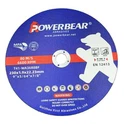
Powerbear is our conpany's best-selling brand in the word.We supply resin-bonded grinding wheel and flap disc.
Resin-boned grinding wheel: Involve cutting disc for metal,cutting disc for inox,2in1 cutting disc and grinding disc.
Flap disc: Invovle Aluminum Oxide Flap Disc,Calcined Aluminum Flap Disc,Zirconia Flap Disc.
Our Certificate
In 2019, the company became a national high-tech enterprise with an annual production capacity of 150 million pieces of cutting and grinding wheels. With advanced technology equipment and strong technical expertise, experienced production, and comprehensive testing methods, the company has obtained ISO9001 quality system certification and 21 unility model patent certificate.
Depressed Center Grinding Discs: These are the most common type of grinding wheels. They have a depressed center that allows them to be used on flat and curved surfaces. They are used for grinding and cutting metal, concrete, and stone.
Flap Discs: These discs are made up of multiple overlapping flaps of abrasive material. They are used for grinding and finishing metal, wood, and plastic. They are more flexible than depressed center grinding wheels and can be used on curved surfaces.
Diamond Grinding Discs: These discs are made up of diamond particles embedded in a metal matrix. They are used for grinding and polishing hard materials such as concrete, granite, and marble.
Wire Brushes: These are not strictly grinding wheels, but they are often used for grinding and finishing metal surfaces. They are made up of wire bristles and are used to remove rust, paint, and other surface coatings.
Sanding Discs: These are similar to flap discs but are made up of sandpaper rather than abrasive flaps. They are used for sanding wood and other materials.
Material to be ground
The type of material you will be grinding determines the type of abrasive and bond needed for the grinding disc. For example, harder materials require a harder abrasive and a stronger bond.
Machine and spindle
The grinding disc must be compatible with the machine and spindle being used. Check the machine specifications for the maximum speed and horsepower, and select a wheel with a maximum speed rating equal to or greater than the machine.
Diameter and thickness
Choose a grinding disc with the correct diameter for the machine being used and with a thickness that provides adequate clearance for the workpiece.
Abrasive type
The type of abrasive used in the grinding disc determines the cutting ability and finish of the grinding. Common abrasive types include aluminum oxide, silicon carbide, diamond, and cubic boron nitride.


Grit size
The grit size refers to the size of the abrasive particles in the grinding disc. A finer grit size produces a smoother surface finish, while a coarser grit size is better for removing material quickly.
Bond type
The bond type refers to the material that holds the abrasive particles together in the grinding disc. Common bond types include vitrified, resinoid, and rubber.
Concentration
The concentration refers to the amount of abrasive in the grinding disc. A highr concentration provides a more aggressive cut, but also reduces the life of the grinding disc.
Workpiece hardness
The hardness of the workpiece determines the type of grinding disc required. Softer workpieces require a softer grinding disc, while harder workpieces require a harder wheel.
Coolant
The type of coolant being used can also affect the selection of the grinding disc. Some coolants can react with certain types of abrasives and bonds, so it's important to choose a wheel that is compatible with the coolant being used.
Steel
Steel is a hard, tough material that requires a hard abrasive and a strong bond. The most common abrasives used for grinding steel are aluminum oxide and silicon carbide. A vitrified bond or a resinoid bond is usually used for grinding steel.
Cast Iron
Cast iron is a brittle material that can crack or break easily. A softer abrasive, such as aluminum oxide, is recommended for grinding cast iron, as it will produce a smoother surface finish. A vitrified bond or a resinoid bond is suitable for grinding cast iron.
Stainless Steel
Stainless steel is a softer material than steel, but it can be more difficult to grind due to its tendency to heat up during grinding. A vitrified bond or a resinoid bond with a finer grit size is recommended for grinding stainless steel.
Non-Ferrous Metals
Non-ferrous metals, such as aluminum, brass, and copper, are softer materials that can be easily scratched. A softer abrasive, such as aluminum oxide, is recommended for grinding non-ferrous metals, and a vitrified bond or a resinoid bond is suitable.
Concrete and Stone
Concrete and stone are hard materials that require a hard abrasive and a strong bond. Diamond or cubic boron nitride (CBN) abrasives are commonly used for grinding concrete and stone, and a metal bond is usually used.
Wood
Wood is a soft material that requires a soft abrasive and a flexible bond. Aluminum oxide or silicon carbide abrasives with a resinoid bond are suitable for grinding wood.
Glass
Glass is a fragile material that requires a soft abrasive and a flexible bond. Diamond abrasives with a resin bond or CBN abrasives with a metal bond are suitable for grinding glass.
Proper Mounting of a Grinding Disc
The improper mounting of a grinding wheel is a major cause of grinding wheel breakage. Proper steps in mounting a grinding wheel are as follows:
Handle and store grinding wheels in a careful manner. Handle and store all grinding wheels as if they were made of glass!
Select the proper grinding wheel and machine for the job.
Lock out and tag all machines before working on them. Disconnect portable machines from their power source before changing the grinding wheel.
Visually inspect all grinding wheels. Also, the use of “ring testing” or “vibration testing” is required for many grinding wheels. Never use a damaged grinding wheel.
Check the machine speed against the maximum operating speed of the grinding wheel. The speed of the grinding wheel must be equal to or greater than the machine's speed. Never overspeed a grinding wheel.
Inspect the machine and its guards. Check the machine's speed with a tachometer before mounting grinding wheels. Never use a damaged machine.
Clean arbor and flanges before mounting a grinding wheel.
Check the mounting flanges for proper type, size, and flange condition. Never use mismatched, undersize, dirty or damaged flanges.
Use only machines designed and guarded for the grinding wheel you are using. Never mount a grinding wheel on a machine that is not designed for that grinding wheel.
Use proper mounting blotters when required or supplied by the manufacturer.
Do not reuse blotters and use only one blotter for each side of the wheel.
Care must be taken to ensure that all blotters are not allowed to “bunch up” or fold over and do not get caught inside the wheel's hole.
Do not force a grinding wheel onto the mounting arbor. If the wheel does not fit, don't use it.
Don't over-tighten the mounting nut or mounting screws. Tighten flanges just enough to prevent wheel slippage or to machine manufacturer's recommendation. Excessive tightening can cause damage to the mounting flanges and wheel breakage.
Replace all guards and reset the machine to accommodate the new grinding wheel.
Wear all required personal protective equipment.
Allow the grinding wheel to run at operating speed for one full minute before using the grinding wheel. Do not allow anyone to stand in front of or in line with the grinding wheel during this test.
The Grinding Disc Must Be Tested for Static Balance Before Installation
The grinding disc must be tested for static balance before installation to ensure that the grinding disc will not vibrate due to imbalance when rotating at high speed, affecting the processing quality and machine tool accuracy. In severe cases, it may also cause damage to the machine tool and breakage of the grinding disc. The purpose of the static balance check is to make the center of gravity of the grinding disc coincide with its axis of rotation, so as to avoid unnecessary vibration during high-speed rotation. According to relevant standards, the maximum imbalance of the grinding disc shall not exceed a certain range, such as 15 to 20 mm, to ensure the safe use of the grinding disc. During the static balance check, if the grinding disc is unbalanced, its heavier part will turn downward during rotation. At this time, it can be adjusted by moving the position of the balance block to achieve a balanced state.
The Difference Between Cutting Discs and Grinding Disc
Cutting discs and grinding discs are two common types of abrasive tools used by many professionals in various industries. Both cutting discs and grinding discs are made with abrasive grains that help in smoothing or removing rough edges from surfaces.
Cutting discs are designed to be used specifically for cutting hard materials such as metals, ceramics, and stones. They are typically thin with sharp edges, allowing them to slice through even the toughest materials with ease. Cutting discs can be used on angle grinders, chop saws, and various other cutting machines. They are often used in metal fabrication, construction, and automotive industries.
Grinding discs, on the other hand, are used for grinding, finishing, and polishing surfaces. They are typically thicker than cutting discs and have a larger surface area. Grinding discs can be used for a variety of applications, including sharpening tools, smoothing metal surfaces, and removing burrs and rust. They are often used in metalworking, machining, and woodworking industries.
While both cutting discs and grinding discs have their specific uses, it is important to note that they are not interchangeable. Attempting to use a cutting disc for grinding or vice versa can result in damage to both the tool and the surface being worked on. It is important to carefully read the manufacturer's instructions and choose the appropriate tool for the specific job.
Both cutting discs and grinding discs offer unique benefits to professionals in various industries. Their specific uses help to improve efficiency and productivity in the workplace. Choosing the correct tool for the job is important and can help to ensure a safe and successful outcome.
How to Maintain Grinding Disc
Inspection
The first step in maintaining grinding wheels is to inspect them regularly. This involves checking for cracks, chips, and other types of damage that may have occurred during use. Visual and dimensional checks can help detect any issues with the wheel. If any damage is found, it is best to replace the wheel rather than attempting to repair it.
Dressing and truing
Dressing and truing are essential maintenance techniques that help restore the grinding wheel's shape and improve its performance. Dressing involves removing the dull and worn abrasive particles from the wheel, while truing involves reshaping the wheel to its original form.
Both dressing and truing can be done using various tools, such as diamond dressers and truing stones. It is important to perform these tasks regularly to keep the grinding wheel in good condition.
Balancing
Balancing grinding wheels is another important aspect of maintenance. An unbalanced wheel can cause vibration and noise, leading to decreased performance and increased wear and tear on the machine. Balancing can be done using a balancer, and it is important to follow the manufacturer's instructions carefully.
Storage
Proper storage of grinding wheels is essential to prevent damage and extend their lifespan. It is important to protect the wheels from moisture, dust, and other environmental factors that can cause damage. Storing the wheels in their original packaging or a protective container is recommended.
Safety precautions
When working with grinding wheels, it is important to take safety precautions to prevent accidents and injuries. Personal protective equipment, such as gloves, safety glasses, and hearing protection, should be worn at all times.
Precautions should also be taken while handling and using the grinding wheels, such as avoiding overloading, following the manufacturer's instructions, and using the correct speed for the wheel.
FAQ
We're professional grinding disc manufacturers and suppliers in China, specialized in providing high quality customized service. We warmly welcome you to buy high-grade grinding disc made in China here from our factory.
Polishing Grinding Disc, Grinding Wheel for Stainless Steel, 2in1 Grinding Wheels