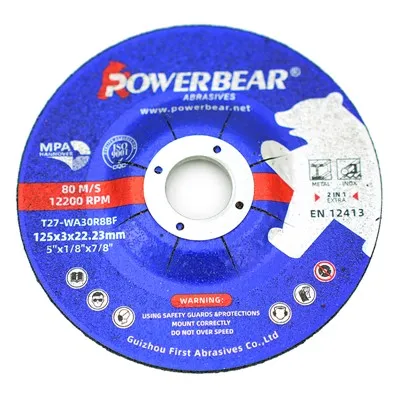



Guizhou First Abrasives Co., Ltd. is a professional company dedicated to the research , production ,sales and services of resin bonded cutting wheels and grinding wheels. Form 2009 to 2023,we continue expanding our factory,star having 2 machines until now 35 machines.Our output ,nowadays,keep more than300000pcs/daily. As a high-tech enterprises ,we will continue to increase investment in technology research and development, introduce advanced equipment, improve product testing methods, and focus on the production of high-end products while developing new products to meet market demand.
Why Choose US
Our Factory
Founded in 2009, Guizhou First Abrasives Co., Ltd. is a professional company dedicated to the research, production, sales and services of resin bonded cutting wheels and grinding wheels. The company is located in Shuichang Industrial Park, Longli County, Guizhou Province, and covers an area of over 60000 m2, with a workforce of more than 300 employees.
Production Market
After more than a decade of development, the company's sales channels have expanded across the country, and its products are now exported to 20 countries and regions including Southeast Asia, Europe, America, and the Middle East.
Our Product
Powerbear is our conpany's best-selling brand in the word.We supply resin-bonded grinding wheel and flap disc.
Resin-boned grinding wheel: Involve cutting disc for metal,cutting disc for inox,2in1 cutting disc and grinding disc.
Flap disc: Invovle Aluminum Oxide Flap Disc,Calcined Aluminum Flap Disc,Zirconia Flap Disc.
Our Certificate
In 2019, the company became a national high-tech enterprise with an annual production capacity of 150 million pieces of cutting and grinding wheels. With advanced technology equipment and strong technical expertise, experienced production, and comprehensive testing methods, the company has obtained ISO9001 quality system certification and 21 unility model patent certificate.

Cutting Disc for Metal and Inox
Max speed :80m/s
Aplication method:Angle grinder,Handheld,fixed,and movable cutting machines.

Max speed :80m/s
Aplication method:Angle grinder,Handheld,fixed,and movable cutting machines.

Cut Off Discs for Stainless Steel
The cutting disc is made of resin as a binder and combines a variety of materials. It has particularly remarkable cutting performance for cutting materials such as alloy steel and stainless steel.

Max speed :80m/s
Aplication method:Angle grinder,Handheld,fixed,and movable cutting machines.

Max speed :80m/s
Aplication method:Angle grinder,Handheld,fixed,and movable cutting machines.


Max speed :80m/s
Aplication method:Angle grinder,Handheld,fixed,and movable cutting machines.

Cutting Disc for Angle Grinder
Max speed :80m/s
Aplication method:Angle grinder,Handheld,fixed,and movable cutting machines.

Super Thin Metal Cutting Discs
Super Thin Metal Cutting Discs can be used by both metallographic precision cutting machines and grinding wheel cutting machines. This cutting disc has a small incision and less material grinding. It is more economical than diamond cutting discs and can significantly reduce the cost of sample preparation.
Often cutting discs, also known as cut-off wheels, are made from a solid abrasive disc. These discs are often used for cutting metal; they are composed of an abrasive mix of grit and adhesive that is formed into a thin, rigid disc with fiber webbing running through it for strength. Some discs used for cutting ceramic tile or stone are made from a solid disc with an edge coated with diamond grit. The most common size for these cutting wheels is 4+1⁄2 inches in diameter; however they can range from 2 to 16 inches in diameter with a thickness range from .045 in. to .125 in. Type 1 discs are flat, and type 27 discs have a raised hub. These wheels are strong but are not immune to breaking. If a cutting wheel breaks while in use, fragments could injure the operator or nearby co-workers. To avoid breaking cutting discs, never exceed the maximum speed (RPM) specified on the disc, and do not overload the disc by cutting with excess force or jamming the wheel into your workpiece.
Advantages of Cutting Disc for Angle Grinder
The art of precision cutting
At the heart of cutting disc lies the art of precision cutting. These wheels are designed to deliver accurate, smooth, and clean cuts, whether you're slicing through metal sheets or shaping intricate designs. Their ability to achieve this level of precision allows craftsmen to execute tasks with minimal material wastage and outstanding accuracy.
Unlocking versatility
Showcase their versatility by accommodating different materials and applications. Whether you're working on metals, ceramics, or concrete, these cutting disc provide the necessary abrasive power to achieve your goals. From removing imperfections to honing intricate details, cutting disc are the go-to solution for craftsmen seeking exceptional results.
Precision reshaping and smoothing
Excel in precision reshaping and smoothing tasks. From smoothing welds to shaping intricate metalwork, cutting disc deliver uniform and controlled material removal. Their precision is key in achieving the desired surface finish, ensuring that your workpieces meet your exact specifications.
Synergy in metalworking
Cutting discs lay the foundation, shaping and preparing materials for further processing. Grinding wheels then step in to refine, polish, and perfect the workpiece, bringing it to its desired form and finish.
Working Principle of Cutting Disc for Angle Grinder
The second-most-used wheel for angle grinders is the cut-off disc. As the name clearly indicates, cut-off discs are used for cutting metal bars and sheets. Compared to grinding wheels, cut-off wheels are thinner in order to deliver the most accurate cuts. This is why working with them is more dangerous. If you suddenly change the position of angle grinders or use them in a position that makes them bend, they shatter easily. The flying small parts of a shattered cutting wheel are hazardous and can result in serious damage. Therefore, you should use high-quality safety gear when trying to cut with an angle grinder. cut-off discs are made from the highest-quality materials, which makes working with them safer compared to low-quality discs. You can use cut-off discs for cutting metal bars, metal tubes, and small pieces of metal sheets and plates. You can also cut out welds with them. For shortening the length of various bolts, it is also a good idea to use an angle grinder and a cut-off wheel.
Selecting the Right Cutting Wheel
Material, Size, and Thickness
When selecting a cutting wheel, the material it is manufactured from is an important factor. The abrasive type used in the wheel affects its cutting capability.
Additionally, the durability and performance of the wheel are influenced by the bonding agents used. Commonly, resin-bonded wheels are chosen for their balanced cutting performance and strength.
The size of the wheel is another important aspect. The diameter of the wheel should align with the required depth of cut. Larger diameter wheels can make deeper cuts but might necessitate the use of more powerful machinery.
It's essential to make sure that the wheel's arbor size is compatible with your machine's specifications in order to ensure a secure and safe fit.
Finally, the thickness of the wheel plays a crucial role. Thin wheels are preferable for making precise, shallow cuts and can help to reduce material wastage. On the other hand, thicker wheels are more durable and suitable for deep cuts and heavy-duty cutting tasks.
Compatibility with Machinery
When selecting a cutting wheel, it's important to consider the type of machinery you'll be using. Different wheels are designed to be compatible with specific machines, such as angle grinders or circular saws.
Using a wheel that's not designed for your specific type of machinery can lead to suboptimal performance and may even pose safety risks.
The power output and revolutions per minute (RPM) of your machinery are significant factors in choosing the right wheel. A wheel must be able to handle the machine's power and speed. Using a wheel that's not rated for your machine's power output or RPM can be both dangerous and inefficient.
Finally, proper mounting and safety considerations are vital. The wheel should fit securely onto your machine to prevent accidents and ensure quality cuts. Additionally, it's important to check the wheel's compatibility with any safety guards or attachments that have been provided with your machinery.
Also, consider the specific application of the wheel, such as whether it's suitable for wet or dry cutting conditions, to ensure optimal performance and safety during the cutting process.
Cutting discs are easily installed onto an angle grinder, or a stationary cutting device, before being use to cut through thick, hard materials.
Metal fabrication is one of the most common uses of cutting wheel. It can be used to cut sheet metal, sizing metal stock for welding, cut a weld to re-weld it, and cutting and notching steel pipe etc.
Smaller projects or more precise cuts may require a angle grinder equipped with a cutting disc. This situation may need a small diameter with super thin thickness cutting disc, which is good for sheet metal and thin materials.
Thicker or heavier materials will need a larger cutting wheel.
Bigger size cutting wheel is used for cutting larger materials, for example, heavy metal stock, metal studs, and large metal pipe. The cutting discs for this tool are usually 10 or 12 inches in diameter. To prevent overheating, we can use lubrication or coolant when cutting heavy materials.
What Materials Are Required for Making Cutting Disc
Abrasives grains-Abrasive grain are particles of man-made abrasive compounds. The chemical structure of the grains determines the physical properties of the grains. (i.e. shape, sharpness, hardness, friability). Common grain types used in making bonded abrasives are brown aluminum oxide, white aluminum oxide, single crystal aluminum oxide.
Brown aluminum oxide: A tough blocky shaped grain used for cutting metals and other high tensile strength materials without excessive fracturing. Used for hardened carbon steel, alloy steel, tool steel.
White aluminum oxide: High friable grain and suitable for fast and cool cutting used for stainless steel (Cr, W), tool steel (SUS, SKH, SU)
Single crystal aluminum oxide: It is used to grind stainless steel, high speed steel and heat sensitive steel.
The most popular abrasive material used in manufacturing cutting wheels is aluminum oxide. You can purchased aluminium oxide cutting wheel in INOX grade quality, which means the cutting wheel contains no iron, which has the ability to cut both stainless steel and mild steel. If the cutting wheel does not specify for use on Stainless Steel or have INOX marked on the label, then it is most likely only used for mild steel cutting. As stainless steel is one of the harder types of steel to cut, if a disc can cut through stainless steel, it will cut through all types of metal including aluminium, rebar, sheet metal and other mild steels.
Bonding agent-The bonding agent that holds the grains together determines the resistance of the wheel. The bonding agent commonly used is phenolic resin powder and phenolic resin liquid.
Reinforcement-The reinforcement fiberglass material provides extra strength to use the wheel at maximum RPMs and withstand lateral pressure that is applied during use.
The fiberglass mesh is used for reinforce strength of cutting disc and grinding wheel, naked fiberglass net and net with black paper are used according to different production process.
Active fillers-Used to enhance the wheel properties and make the composite more compact, stronger or abrasion resistance, improve its conductivity and inhibit resin deterioration due to oxidation.
Steel ring-There are several functions of the steel rings. One is to position the center hole of the cutting disc and grinding wheel. The second is to protect the spindle from being worn by repeated installation of grinding wheels. Third, it is very easy to transform a small washer to cope with the size of the center hole of various non-standard grinding wheels. In general, the steel ring is made of stainless iron, tinplate or galvanized iron.
Factors Affecting the Service Life of Cutting Discs
Material of the Workpiece
The type of material being cut plays a significant role in the wear and tear of cutting discs. Harder materials like stainless steel or cast iron require more abrasive force, which can shorten the disc's service life. Conversely, softer materials like aluminum may allow the disc to last longer.
Disc Material and Quality
The composition of the cutting disc itself is crucial. High-quality discs made from superior materials such as premium aluminum oxide or zirconia alumina generally offer longer service life. Investing in reputable brands can lead to better performance and durability.
Cutting Speed and Pressure
The speed at which the disc rotates (measured in RPM) and the pressure applied during cutting are vital factors. Operating at the recommended speed and applying consistent, moderate pressure can prevent premature disc wear and reduce the risk of accidents.
Machine Condition
The condition of the cutting machine, including its power, stability, and alignment, directly affects the disc's performance. A well-maintained machine with proper alignment ensures even wear on the disc, extending its service life.
Cooling and Lubrication
Overheating is a common cause of reduced disc life. Using appropriate cooling methods, such as cutting fluids or air cooling, can help maintain the disc's temperature and prevent overheating, thereby prolonging its service life.
Applications of Cutting Discs in the Automotive Industry
Cutting discs are an essential tool in the automotive industry. These discs are thin, circular blades made from abrasive materials such as silicon carbide or diamond that are used for cutting through various types of metal, including steel and aluminum.
One of the most common uses of cutting discs in the automotive industry is for cutting and shaping body panels. Body panels are typically made from sheet metal, and cutting discs are used to precisely cut and shape these panels to fit the contours of a vehicle. This is particularly important in the custom car industry, where every vehicle is unique and requires custom bodywork.
Cutting discs are also used for cutting through bolts, screws, and other metal components. This is particularly useful when repairing or replacing parts on a vehicle. By using a cutting disc, mechanics can quickly and easily remove damaged or worn-out parts without damaging surrounding components.
In addition to cutting and shaping metal, cutting discs are also used for grinding and smoothing metal surfaces. This is particularly important when preparing surfaces for welding or painting. By using a cutting disc to remove rust, paint, or other imperfections, mechanics can ensure a clean and smooth surface for welding or painting.
Cutting discs are also used in the manufacturing of automotive components. For example, cutting discs are used to cut and shape brake rotors, which are a critical component of a vehicle's braking system. By using a cutting disc, manufacturers can produce precise and uniform brake rotors that provide consistent braking performance.
Cutting discs are a versatile tool that plays a crucial role in the automotive industry. Whether used for cutting and shaping body panels, removing damaged parts, or manufacturing components, cutting discs are an essential tool for any mechanic or manufacturer in the automotive industry.
Tips For Proper Cutting Disc Maintenance
Cleanliness is key
●Debris removal: After each use, make it a habit to remove any accumulated debris from the blade. Resin, concrete, and other materials can compromise the blade's effectiveness and lead to overheating.
●Solvent cleaning: For stubborn residues, use a solvent recommended by the blade manufacturer. Ensure the blade is completely dry before storage to prevent corrosion.
Protecting the blade's core
●Avoiding overheating: Excessive heat can damage the bond holding the diamond segments. To prevent overheating, periodically pause during cutting to allow the blade to cool.
●Water or lubrication: If the blade is designed for wet cutting, ensure a constant water supply to cool and lubricate the blade. Dry cutting blades may benefit from intermittent lubrication to reduce friction.
Storing blades safely
●Vertical storage: Store diamond blades vertically to prevent warping or damage to the blade's core. This also helps maintain the blade's shape over time.
●Use blade covers: When not in use, protect your diamond blades with covers. This safeguards them from external elements and minimizes the risk of accidental damage.
Recognizing signs of wear
●Inspecting segments: Regularly inspect diamond segments for signs of wear, such as a reduction in height. Worn-out segments may result in slower cutting speeds and reduced precision.
●Check for core damage: Examine the steel core for cracks or warping. A damaged core compromises the blade's structural integrity and safety.
Blade rotation and flipping
●Regular rotation: Periodically rotate the blade on the saw to ensure even wear on all segments. This extends the overall lifespan of the blade.
●Flipping the blade: For blades with a double-sided design, flipping the blade can provide a fresh set of diamond segments, maximizing usability.
Time for replacement
●Knowing when to replace: Don't push a blade beyond its recommended lifespan. If cutting efficiency diminishes despite proper maintenance, it's time for a replacement.
●Retirement criteria: Consider retiring blades with excessive wear, damaged cores, or signs of fatigue. Using a compromised blade poses risks to both the user and the tool.
FAQ
Hot Tags: cutting disc for angle grinder, China cutting disc for angle grinder manufacturers, suppliers, factory, 5 Inch Cutting Discs, 4 5 cutting Disc, cutting disc, Cutting Wheels, Zirconia Flap Disc, Stainless Steel Cutting Disc