
Hey there! I'm a supplier of Grinding Wheels, and today I wanna chat about something super important: what's the effect of grinding wheel shape on the work surface?
First off, let's understand the basic types of grinding wheel shapes and how they're used. There are several common shapes out there, like straight wheels, cylinder wheels, cup wheels, and dish wheels. Each of these shapes has its own unique characteristics and applications, which directly impact the work surface.
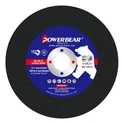
Straight wheels are probably the most commonly used ones. They're simple in shape, just a flat disc. These wheels are great for surface grinding, where you want to create a smooth and flat work surface. When you use a straight wheel, it makes contact with the work surface over a relatively large area. This even contact helps in removing material evenly, reducing the chances of creating uneven spots on the surface. For example, if you're working on a large metal plate and you want to make it perfectly flat, a straight wheel is your go - to. You can find a great selection of Grinding Wheels in straight shapes on our website.
Cylinder wheels, on the other hand, are mainly used for internal grinding. They have a cylindrical shape, which allows them to fit inside holes or bores. When you're grinding the inside of a hole, the shape of the cylinder wheel ensures that the inner surface is ground uniformly. This is crucial because any unevenness inside a hole can cause problems with the fit of other components. For instance, in an engine block, the cylinders need to be ground to very precise dimensions. A cylinder grinding wheel helps achieve that accuracy, resulting in a smooth and properly sized internal surface.
Cup wheels are designed with a concave shape. They're often used for grinding edges and corners. The concave shape allows the wheel to get into tight spaces and grind the edges smoothly. When you're working on a workpiece with sharp edges that need to be rounded off or smoothed, a cup wheel can do the job efficiently. It can also be used for surface grinding in some cases, especially when you need to work on a smaller area. The concentrated grinding action of a cup wheel can quickly remove material from the edges, giving the work surface a clean and finished look.
Dish wheels are similar to cup wheels but have a more pronounced dish - like shape. They're typically used for specialized grinding tasks, such as tool sharpening. The shape of the dish wheel allows it to grind the cutting edges of tools at the right angle. When you're sharpening a drill bit or a milling cutter, a dish wheel can help create a sharp and precise cutting edge. This not only improves the performance of the tool but also extends its lifespan.
Now, let's talk about how the shape of the grinding wheel affects the surface finish of the workpiece. The surface finish is a measure of how smooth or rough the work surface is. Different grinding wheel shapes can produce different surface finishes.
A straight wheel, as mentioned earlier, makes large - area contact with the work surface. This usually results in a relatively smooth surface finish. The even distribution of the grinding force across the surface helps in minimizing scratches and irregularities. However, if the feed rate or the grinding pressure is too high, it can still cause some roughness on the surface.
Cylinder wheels, when used for internal grinding, can also produce a smooth surface finish inside the hole. The continuous rotation of the cylinder wheel around the inner surface helps in creating a circular and even finish. But just like with straight wheels, improper grinding parameters can lead to a poor surface finish.
Cup wheels and dish wheels, due to their more concentrated grinding action, can sometimes leave a slightly rougher surface finish compared to straight or cylinder wheels. However, this can be adjusted by using the right grit size of the grinding wheel. A finer grit will result in a smoother surface finish, even with the concentrated grinding of cup and dish wheels.
Another important aspect is the material removal rate. The shape of the grinding wheel plays a big role in how quickly material can be removed from the work surface. Straight wheels, with their large contact area, can remove material at a relatively fast rate when grinding large flat surfaces. But for more detailed work or when you need to be more precise, the material removal rate might need to be adjusted.
Cylinder wheels are also efficient at removing material from the inside of holes, but the rate depends on the diameter of the hole and the size of the wheel. Cup and dish wheels, because of their shape, can remove material quickly in the areas they're grinding, especially when working on edges and corners.
When it comes to specific materials, the choice of grinding wheel shape also matters. For example, when grinding aluminum, you need a grinding wheel that can handle the soft and sticky nature of the material. A Grinding Wheel for Aluminum with the right shape can prevent the aluminum from clogging the wheel and ensure a smooth grinding process. Straight wheels are often a good choice for grinding large aluminum surfaces, while cup wheels can be used for finishing the edges.
For stainless steel, which is a harder and more corrosion - resistant material, a Grinding Wheel for Stainless Steel is required. The shape of the wheel can affect how well it grinds the stainless steel without causing discoloration or damage to the surface. Cylinder wheels are useful for internal grinding of stainless - steel pipes, while straight wheels can be used for surface grinding of stainless - steel sheets.
In conclusion, the shape of the grinding wheel has a significant impact on the work surface. It affects the surface finish, the material removal rate, and is also crucial when working with different materials. Choosing the right grinding wheel shape for your specific application is essential for achieving the best results.


If you're in the market for high - quality grinding wheels, whether it's for aluminum, stainless steel, or other materials, we've got you covered. We offer a wide range of grinding wheels in different shapes and sizes to meet your needs. Don't hesitate to get in touch with us to discuss your requirements and start a procurement negotiation. We're here to help you find the perfect grinding wheel for your projects.
References
- "Grinding Technology: Theory and Applications of Machining with Abrasives" by Stephen Malkin
- "Manufacturing Engineering and Technology" by S. Kalpakjian and S. R. Schmid